2026年5月 · 5分钟阅读May 2026 · 5 min read
如何建立一个真正能坚持的晨间仪式——使用当下How to Build a Morning Ritual That Actually Sticks — with Presently
你不需要凌晨5点起床,也不需要20分钟冥想。科学告诉你如何真正开始好的一天——以及当下的晨间仪式功能如何让这件事变得毫不费力。You don't need a 5 AM wake-up or a 20-minute meditation. What science actually says about starting your day well — and how Presently's Morning Ritual makes it effortless.
大多数晨间习惯建议是为"没有真实生活的人"设计的。"凌晨5点起床。冥想30分钟。写日记20分钟。冷水澡。"当你完成了清单,你的真实一天已经开始了——你已经累了。Most morning routine advice is built for a person who doesn't have a life. "Wake up at 5 AM. Meditate for 30 minutes. Journal for 20. Cold shower." By the time you've completed the list, your actual day has started — and you're already tired.
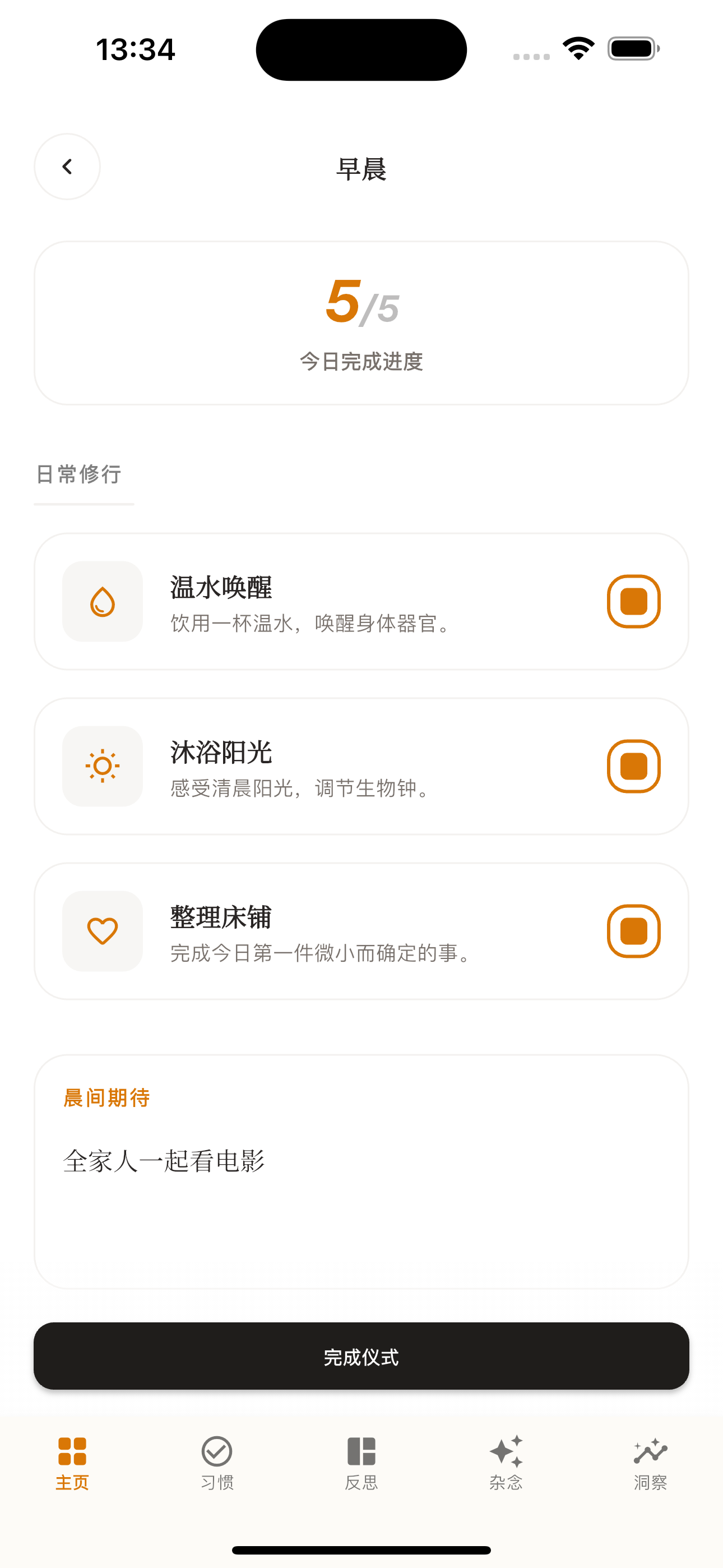
当下采用了不同的方法。它不是给你的早晨增加更多内容,而是帮助你有意识地做一件事。就这样。五分钟,如果需要的话。它有真正的科学依据。Presently takes a different approach. Instead of adding more to your morning, it helps you do one thing with intention. That's it. Five minutes, if that. And it's rooted in real science.
醒来后的30分钟窗口期与众不同The 30-Minute Window After You Wake Up Is Different
当你醒来时,你的身体会经历一种叫做睡眠惯性的状态——在这段时期里,迷糊、认知减缓和短暂的记忆力减弱会在大约30分钟内逐渐消退。在这期间,你的皮质醇水平正在经历所谓的皮质醇觉醒反应(CAR)——一天中第一次也是最大的一次皮质醇峰值。When you wake up, your body goes through something called Sleep Inertia — a period where grogginess, slowed cognition, and weak short-term memory gradually fade over roughly 30 minutes. During this window, your cortisol levels are experiencing what's known as the Cortisol Awakening Response (CAR) — the first and largest cortisol spike of the day.
📚 研究:📚 Research: 2022年发表在《神经科学前沿》上的一项研究证实,CAR表现出强烈的昼夜节律,即使在调整了先前睡眠因素后仍然存在。研究人员得出结论,CAR的存在是为了"优化对醒来相关预期压力源的生理反应"。通俗地讲:你的身体已经准备好应对接下来的一切。A 2022 study in Frontiers in Neuroscience confirmed that CAR exhibits a robust circadian rhythm that persists even after adjusting for prior sleep. The researchers concluded that CAR exists to "optimize physiological responses to the anticipated stressors related to awakening." In plain terms: your body is primed to handle what comes next.
→ 阅读研究:神经科学前沿(2022)→ Read the study: Frontiers in Neuroscience (2022)
这意味着醒来后的第一个30分钟不仅仅是"过渡时间"——它们是一个窗口,你的大脑在生理上已经准备好为接下来的一切定下基调。你在这个窗口里做的事情,比一个小时后做的事情更重要。This means the first 30 minutes after waking aren't just "transition time" — they're a window where your brain is physiologically ready to set the tone for what's ahead. What you do in that window matters more than what you do an hour later.
当下的晨间仪式实际上做了什么What Presently's Morning Ritual Actually Does
🌅 签到🌅 The Check-In
从主屏幕直接打开存在签到。为你的心情(1-5星)和能量水平打分。添加一个简短的笔记,描述你在做什么或感觉如何。整个过程不到一分钟。重点不是追踪数据——而是让你有意识地选择如何开始这一天。Right from the home screen, you open a presence check-in. Rate your mood (1-5 stars) and energy level. Add a brief note about what you're doing or how you're feeling. It takes under a minute. The point isn't to track data — it's to make a conscious choice about how you're starting.
🎯 设定每日意图🎯 Setting a Daily Intention
签到之后,你为今天设定一个单一的意图。不是待办清单,不是生产力目标。只是一件具体的、小小的意图——比如"如果有人反对这个项目,我会冷静回应"或者"午餐时真正休息一下"。关于实施意图的研究表明,一个具体的"如果-那么"心理提示会显著增加你坚持执行的可能性。After your check-in, you set a single intention for the day. Not a to-do list. Not a productivity goal. One small, concrete intention — something like "respond calmly if someone pushes back on this project" or "take a real break at lunch." Research on implementation intentions shows that a specific "if-then" mental cue dramatically increases the chance you'll follow through.
🔄 一致性胜过完美🔄 Consistency Over Perfection
应用会追踪你的晨间仪式连续记录。但设计理念是建立在这样的观点上:一致性比连续记录更重要——每周坚持4-5天,比强迫自己坚持7天然后放弃更有价值。The app tracks your morning ritual streak. But the design philosophy is built around the idea that consistency matters more than streaks — showing up 4-5 days a week is more valuable than forcing yourself to do it 7 days and then quitting.
关于早晨意图设定的研究怎么说What the Research Says About Morning Intention-Setting
设定每日意图的做法与治疗中使用的认知行为方法有共同根源——具体来说,就是"预期应对"的理念,即你在心理上排练你将如何应对一个可能的挑战。与其希望你会做正确的事情,不如提前决定。The practice of setting a daily intention shares roots with cognitive behavioral approaches used in therapy — specifically, the idea of "anticipatory coping," where you mentally rehearse how you'll respond to a likely challenge. Rather than hoping you'll do the right thing, you pre-decide.
结合强制你进行片刻自我觉察的简短签到,这创造了一个微仪式,向你的神经系统发出信号:"我在这里,我意识到了,我在选择今天如何度过。"Combined with the brief check-in that forces a moment of self-awareness, this creates a micro-ritual that signals to your nervous system: "I'm here, I'm aware, I'm choosing how today goes."
它真的有效吗?Does It Actually Work?
这个功能本身没有魔法。效果来自于坚持使用。那些持续使用晨间仪式的用户数据显示,他们描述自己一天的方式有了可测量的变化——不是因为应用做了什么特别的事,而是因为他们养成了用意图开始而非反应来开始的习惯。There's no magic in the feature itself. The effect comes from showing up. The data from users who use the Morning Ritual consistently shows a measurable shift in how they describe their days — not because the app does anything special, but because they've built the habit of starting with intention instead of reaction.
如果你从未有过晨间仪式,从这个开始:第一件事就打开当下,完成签到,设定一个意图。不要追求完美,追求重复。这就是全部。If you've never had a morning ritual, start with this: open Presently first thing, do the check-in, set one intention. Don't aim for perfect. Aim for repeated. That's the whole thing.