2026年5月 · 阅读约需6分钟May 2026 · 6 min read
你的情绪数据在告诉你什么——如何解读What Your Mood Data Is Actually Telling You — and How to Read It
两周打卡后突然出现一整页图表和百分比。这些到底是什么意思?这是一份普通人也能看懂的当下 App 洞察页面解读指南——以及你真正该怎么用这些信息。Two weeks of check-ins and suddenly there's a whole page of charts and percentages. What does any of it mean? Here's a plain-language guide to reading Presently's Insights — and what to actually do with the information.
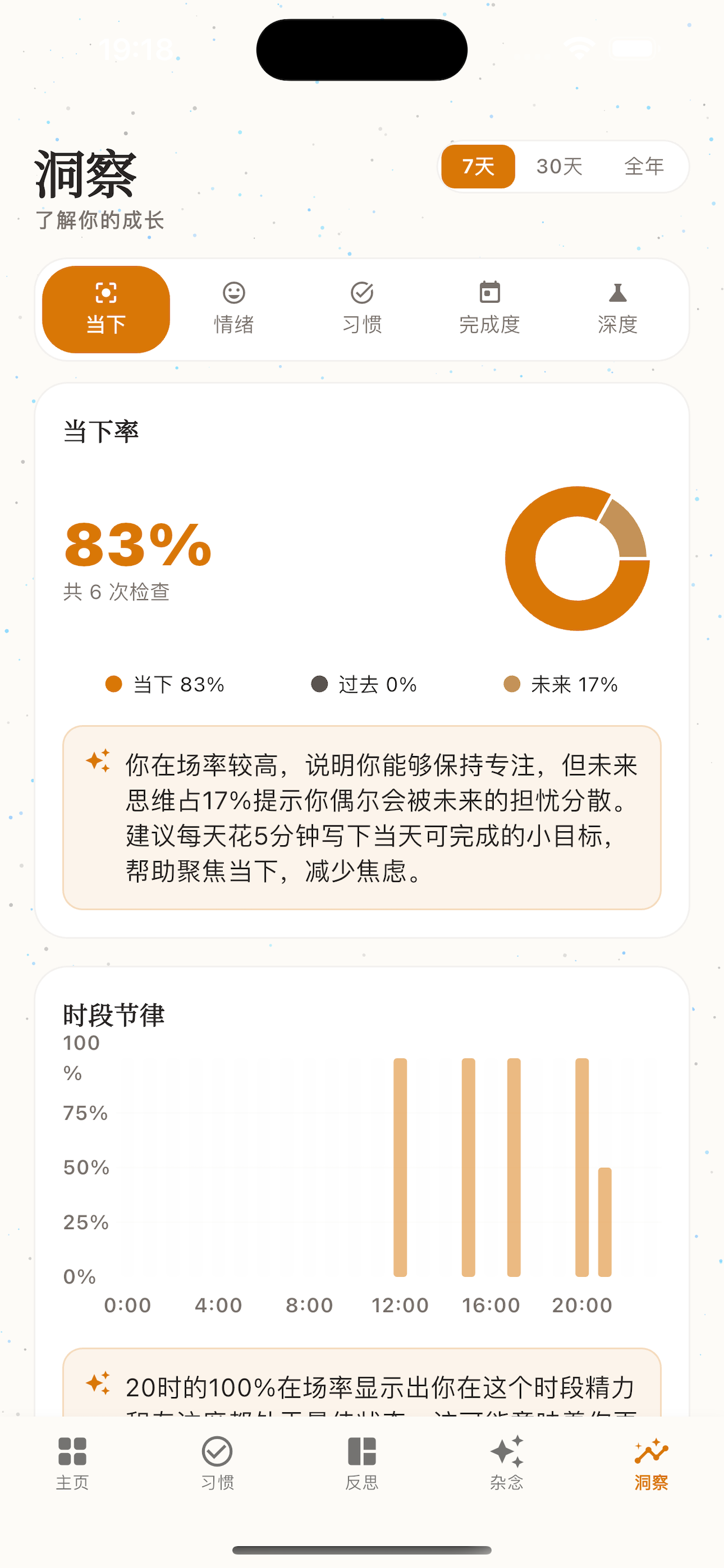
在开始之前,先建立一个正确的认知:洞察页面是一面镜子,不是成绩单。它的作用是让你看到平时实时看不见的模式,不是评判你做得好不好。如果数据"不好看",那说明你有信息——有信息总比没有好。目标不是完美的趋势线,是觉察。Before we go anywhere: the Insights page is a mirror, not a report card. Its job is to show you patterns you couldn't see in real time. If the numbers look bad, that means you have information — which is always better than not having it. The goal isn't a perfect trend line. The goal is awareness.
洞察页面展示的四个指标The Four Things the Insights Page Shows You
📊
当下率Presence Rate
所选时间段内你至少打了一次卡的天数百分比。它反映的是你持续进行自我觉察的频率,不是你生活"做得好不好"的分数。The percentage of days in the selected period where you logged at least one check-in. It's a proxy for how consistently you're engaging with self-awareness — not a score on how well you're doing in life.
看什么:What to look for: 持续性比完美重要。每周4-5天持续8周,比连续7天然后停一个月更有意义。如果当下率低,先问自己:是太忙了,还是忘了,还是不想记录?三个原因的调整方式完全不同。Consistency over perfection. 4-5 days a week for 8 weeks is more meaningful than 7 days for 2 weeks followed by a month of nothing. If your presence rate is low, ask yourself: is it that I'm too busy, or that I forgot, or that I didn't want to? The answer changes what to do next.
📈
情绪趋势Mood Trends
情绪评分随时间变化的图表——按日、周或月显示,取决于你的视图。展示你感受的一般方向和变化幅度。Mood ratings plotted over time — daily, weekly, or monthly, depending on your view. Shows the general direction and variation in how you've been feeling.
看什么:What to look for: 看趋势,不是单日峰值。偶尔一两天不好是噪音。2-3周内持续向下是信号。还要看异常值——某一天突然特别高或特别低。异常值背后总是有故事,而那个故事往往才是数据里最有价值的信息。Trends, not single-day spikes. A bad day here and there is noise. A consistent downward trend over 2-3 weeks is signal. Also look for outliers — that one day that's dramatically higher or lower than everything else. Outliers always have a story behind them, and that story is often the most valuable thing in the data.
✅
习惯完成度Habit Completion
你对自己设定的习惯或仪式的坚持程度——无论是每日打卡、晨间仪式,还是其他你在 App 里建立的定期意图。How well you've kept to habits or rituals you set for yourself — whether daily check-ins, morning rituals, or other recurring intentions you've established in the app.
看什么:What to look for: 从一个你能实际达成的目标开始。50%的完成率但持续8周,比90%完成率持续2周然后倦怠更有意义。如果你持续达不到目标,问自己:这个习惯真的适合我吗,还是我定的标准太高了?调整目标不是放弃,是校准。Start with a target you can actually hit. 50% completion that's consistent is worth more than 90% for 2 weeks followed by burnout. If you're consistently falling short of your target, ask: is this habit genuinely right for me, or did I set the bar too high? Adjusting a target isn't giving up — it's calibrating.
⏰
时段节律Time-of-Day Patterns
你在哪个时段打卡最多,以及不同时段情绪和能量的差异。揭示你自然最可能在什么时候使用 App——以及什么时候你感受最好。Which times of day you check in most, and how your mood and energy differ at different times. Reveals when you're naturally most likely to engage with the app — and when you tend to feel best.
看什么:What to look for: 如果你发现自己总是在某个时段打卡,那是你自然的节律。有些人天生是晨型人,有些人是夜猫子。利用这些信息把仪式安排在适合你的时间,而不是对抗你的生理规律——这让持续性变得容易得多。If you notice you're consistently checking in during a specific window, that's your natural rhythm. Some people are morning people, some are evening people. Using this information to schedule your rituals at the right time for you — rather than fighting your biology — makes consistency dramatically easier.
如何利用这些信息What to Do With This Information
数据只有改变了什么才有意义。以下是三个实际使用洞察的方法:The data only matters if it changes something. Here are three ways to use Insights practically:
1. 月度回顾,不是每日沉迷。Monthly review, not daily obsessing. 每月花5分钟回顾过去一个月的数据。问自己:这和我觉得生活目前怎么样的感觉一致吗?定期退后一步看自己的模式这个习惯本身——就是自我领导力的一种形式。不需要比这更复杂。Once a month, spend 5 minutes looking at the past month's trend. Ask: is this consistent with how I feel life is going right now? This single habit — of periodically stepping back to look at your patterns — is itself a form of self-leadership. It doesn't need to be more complicated than that.
2. 用异常值作为数据点。Use outliers as data points. 当你看到一个特别好或特别差的日子时,在日历上标记:"3月15日——和X发生了大争执。"随着时间推移,你会有关于什么与情绪变化真正相关的记录——那是任何其他方式都无法获得的可操作信息。When you see a dramatically good or bad day, mark it in your calendar: "March 15th — big argument with X." Over time, you'll have a record of what's actually correlated with your mood shifts — and that's actionable information that isn't available any other way.
3. 让它挑战你的假设。Let it challenge your assumptions. 大多数人都以为知道自己什么情况下感觉好或不好。数据往往讲述一个不同的故事。你可能会发现周末其实没有你以为的那样让你充电,或者你一直担心的那个工作项目其实没问题。意外的发现才是这些数据的重点。Most people assume they know what makes them feel good or bad. The data often tells a different story. You might find that the weekend doesn't actually recharge you as much as you think, or that the work project you were dreading was actually fine. Surprise discoveries are the point.
⚠️ 洞察页面不能告诉你的一件事One thing Insights can't tell you
如果你注意到情绪持续向下趋势已经持续数周——同时伴有睡眠、食欲或社交行为的变化——无论 App 怎么说,都值得认真对待。洞察是一面镜子,不是诊断。如果你有这样的情况,考虑和你信任的人谈谈,或寻求专业人士帮助。If you notice a sustained downward trend in mood over several weeks — combined with changes in sleep, appetite, or social behavior — that's worth taking seriously regardless of what the app says. Insights is a mirror, not a diagnosis. Consider talking to someone you trust, or a professional.
记录越多,它就越有用The More You Log, the More Useful It Gets
在大约6-8周相当持续的使用后,洞察才会变得真正强大。需要足够多的数据点才能浮现的模式——每周节律、活动关联、时段模式——需要这些数据积累。如果你使用当下还不到一个月,洞察可能感觉很单薄。正常的。继续打卡。Insights become genuinely powerful after about 6-8 weeks of reasonably consistent use. The patterns that emerge — weekly rhythms, activity correlations, time-of-day patterns — require enough data points to surface. If you've been using Presently for less than a month, Insights might feel thin. That's normal. Keep checking in.